
Sometimes the purchase begins long before you open your wallet.
It begins with the late meeting that leaves you too tired to cook. The quiet evening when browsing turns into shopping. The friend who suggests somewhere more expensive than you planned. The email announcing that something you had not been thinking about is suddenly 40 percent off.
By the time the payment screen appears, much of the decision has already happened.
This is why repeatedly telling yourself to spend less can feel strangely ineffective.
The purchase may be the visible part, but the trigger came first.
Finding those triggers changes the question from “Why do I keep doing this?” to something much more useful.
“What keeps happening before I spend money I later wish I had kept?”
Table of Contents
ToggleStart With The Pattern Instead Of The Purchase
A trigger is what starts the spending sequence
A spending trigger is a situation, feeling, cue, thought, or environment that makes a particular kind of purchase more likely.
It does not force you to spend. It simply shifts the odds.
Stress may make convenience spending more appealing. Boredom may send you toward shopping apps. Payday may create a temporary feeling of abundance. A sale notification may turn a product you had never considered into something that suddenly feels urgent.
The purchase is the end of the sequence. The trigger is closer to the beginning.
Repeated spending matters more than isolated expensive purchases
One expensive dinner does not necessarily reveal a spending trigger. Neither does buying a coat, booking a vacation, or replacing a broken appliance.
Look for repetition instead.
Do similar purchases appear after difficult workdays? Does online shopping cluster late at night? Does spending rise when you are with particular people? Do you buy more immediately after getting paid?
A trigger becomes useful to investigate when the same kind of situation repeatedly leads toward the same kind of spending.
The goal is recognition rather than perfect self control
You are not trying to become someone who never experiences temptation.
You are trying to recognize the situations in which your normal spending judgment becomes less reliable.
That is a much more manageable problem. Once the situation is visible, you can change what happens around it rather than depending entirely on willpower at checkout.
Review Your Statements For Repeated Spending Clues
Start with transactions you would choose differently today
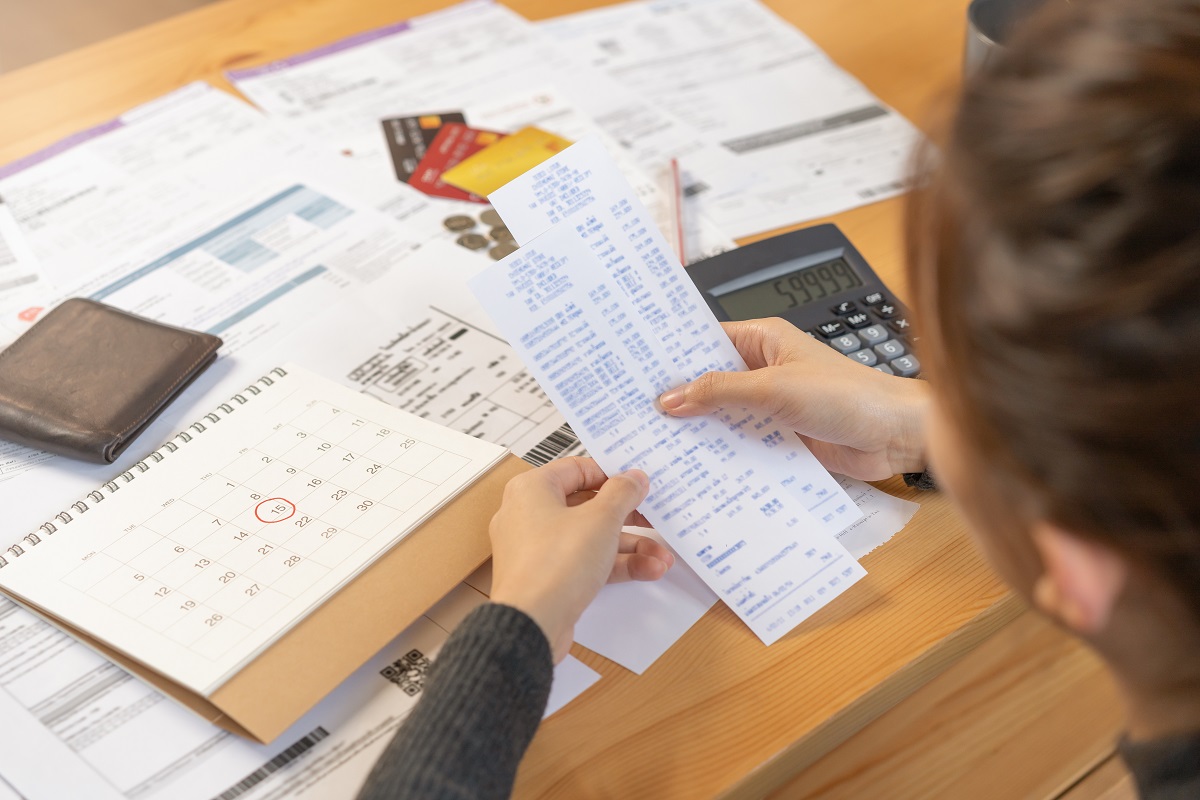
Pull up the last four to eight weeks of transactions.
Do not mark every optional purchase. Mark the ones that make you think, “I probably would not buy that again.”
Perhaps it is repeated food delivery, several small online orders, clothing that was barely worn, convenience purchases, game spending, beauty products, hobby supplies, or repeated trips into stores that seem to produce something every time.
You are building a small sample of purchases worth understanding.
Look for clusters instead of studying every dollar
Once you have marked them, look at when they happened.
Three takeout orders may all have occurred on evenings when you worked late. Several shopping purchases may have happened on weekends. Small food purchases may appear almost every afternoon.
Clusters matter because they suggest that the transactions share a cause.
Without this step, fifteen purchases can look like fifteen separate failures of discipline. With it, they may turn out to be one recurring situation that can be redesigned.
Notice merchants that appear more often than expected
Sometimes the trigger is easier to see through the merchant.
One retailer appears twelve times. A food delivery app appears much more often than you remembered. A convenience store has somehow become part of the commute.
Seeing the same name repeatedly can reveal a habit that memory had blurred into ordinary life.
Compare frequency with the value you actually received
Frequent spending is not automatically a problem.
You may buy coffee several times a week and genuinely value the ritual, the social contact, or the break it creates.
The question is whether the frequency matches the value.
If the purchases are barely remembered, frequently regretted, or interfering with something more important, they deserve closer attention.
Notice The Time And Place Around Purchases
Certain hours can become predictable spending windows
Look at transaction times where your statements or apps make them available.
Perhaps online shopping happens between 9 p.m. and midnight. Takeout orders cluster between 6 and 8 p.m. Convenience purchases happen on the way home from work.
This gives the habit an address in your day.
“I overspend online” is vague.
“I shop online after 10 p.m. when I am tired and scrolling in bed” is specific enough to work with.
Physical locations can quietly become financial cues
A route through a shopping center can become associated with buying lunch. A particular supermarket may encourage more browsing than another. Waiting at a train station might lead to snacks or small purchases simply because the stores are there.
None of this means the location is somehow controlling you.
It means environments contain cues, and repeated exposure can make familiar actions feel easier and more automatic.
Ask what usually happens immediately before arrival
The place may not be the whole trigger.
You stop at the convenience store because you skipped breakfast.
You visit the mall because you want somewhere to go on a rainy afternoon.
You browse an online store because a social media post sent you there.
Look one step earlier. Sometimes the real trigger sits just outside the purchasing environment.
Separate Emotional Triggers From Practical Spending Needs
Feelings can change what a purchase seems worth
The same purchase can look completely different depending on how you feel.
On a calm Saturday morning, a $150 pair of shoes may seem unnecessary.
After a terrible week, they may feel like a deserved reward.
The shoes did not change.
The emotional job assigned to them did.
This is why emotional triggers deserve attention, not because emotions are irrational, but because they can change the purpose of spending without you fully noticing the shift.
Look for the feeling before recurring purchases
Common patterns include stress, boredom, disappointment, loneliness, frustration, insecurity, excitement, and the desire for a reward.
Do not try to diagnose every purchase psychologically.
Instead, ask a simple question about the transactions you already identified:
What was I feeling or dealing with around this time?
You may discover that several supposedly unrelated purchases happened after the same emotional experience.
Do not confuse emotional spending with emotional weakness
Buying something can provide novelty, comfort, anticipation, distraction, or a feeling of control.
Those rewards are real, even if they are temporary.
Calling yourself irresponsible does not remove the reward the purchase was providing.
Understanding it gives you a better chance of finding another response that can compete with it.
Watch For Stress Spending Before It Feels Urgent
Stress often makes immediate relief more attractive
When your mental bandwidth is already occupied, convenience becomes valuable.
You may pay for delivery rather than cook. Buy something quickly rather than compare options. Spend on entertainment because you want the day to feel different. Say yes to something because making another decision feels exhausting.
Some of this spending may be completely reasonable.
The problem appears when stress repeatedly turns short-term relief into a financial pattern you cannot comfortably support.
Look for spending after predictable stressful events
Does spending change after meetings with a particular client?
At the end of a demanding workweek?
During family conflict?
When bills feel overwhelming?
When a deadline is approaching?
Predictable stress creates an opportunity to prepare before the usual spending decision appears.
Notice when spending becomes a reward system
“I deserve this” is not automatically a bad reason to spend money.
You are allowed to enjoy what you earn.
But if every difficult day creates a financial reward, life can become expensive simply because life contains difficult days.
Ask whether the reward still feels worthwhile afterward. If it rarely does, the issue may be less about deserving something and more about needing a different way to mark the end of a hard day.
Notice How Tiredness Changes Your Spending Decisions
Low energy makes the easiest option more powerful
Tiredness creates its own spending environment.
The meal that seemed easy to cook at lunchtime feels absurdly ambitious at 7 p.m. Comparing prices suddenly feels like work. Closing the shopping app requires more effort than tapping buy.
This is why spending plans created while rested can fail during the exact moments they are supposed to guide.
The plan assumes the evening version of you has the same patience as the morning version.
Find purchases that repeatedly happen after long days
Food is an obvious category, but tired spending can appear elsewhere too.
Transport upgrades.
Convenience purchases.
Online shopping.
Paid entertainment.
Quick purchases made without comparing alternatives.
If the same spending follows long days, tiredness may be part of the trigger rather than an excuse added afterward.
Prepare the cheaper option while energy is available
This is where awareness becomes practical.
If food delivery is the recurring pattern, keep two meals at home that require almost no effort.
If late-night shopping is the problem, log out of the shopping accounts before the evening begins.
Make the better choice easier before you need to make it tired.
Look For Social Triggers That Raise Spending
Spending can rise simply because other people are present
Money behaves differently in social settings.
You might agree to a more expensive restaurant because everyone else seems comfortable with it. Buy another drink because the group is staying. Join a trip because saying no feels awkward. Upgrade something after seeing what friends or coworkers own.
None of this requires anyone to pressure you directly.
Social context changes what feels normal.
Notice which relationships produce repeated financial stretching
Do not reduce this to “expensive friends.”
The same person may be perfectly happy doing something inexpensive if you suggest it.
Instead, look for situations where you consistently spend beyond what you intended.
Friday drinks.
Weekend shopping.
Group vacations.
Children’s activities.
Gift expectations.
Once you know the setting, you can plan for it more deliberately.
Comparison can create needs that did not exist yesterday
Someone renovates their kitchen.
A coworker buys a new car.
A friend upgrades their phone.
Suddenly your perfectly functional version feels slightly disappointing.
Comparison is powerful because the purchase can still be justified logically. The car is nicer. The phone is faster. The kitchen really could be improved.
The useful question is whether you wanted the change before someone else’s purchase made yours look inadequate.
Set social spending limits before entering the situation
If certain situations reliably raise spending, decide the boundary earlier.
You may set an amount for the evening, choose the restaurant in advance, decide which events you will attend this month, or suggest lower-cost alternatives.
A limit is easier to defend when it was chosen calmly rather than invented halfway through the event.
Find The Environmental Cues Making Shopping Automatic
Your phone may contain dozens of spending prompts
Retailers do not wait patiently for you to remember that they exist.
There are notifications, emails, text messages, personalized recommendations, retargeted ads, wish-list reminders, abandoned-cart messages, and limited-time offers.
Each one creates another opportunity to consider buying something.
If shopping frequently begins after one of these prompts, the marketing itself is part of the trigger.
Saved payment details shorten the decision too much
One-click purchasing is convenient because it removes friction.
That is exactly why it can be unhelpful when a spending pattern already feels too automatic.
If you can move from desire to completed payment in twenty seconds, there is very little room for reconsideration.
Removing stored payment details can create enough delay for a second thought to appear.
Shopping apps can turn boredom into product exposure
A retailer on your phone is not simply a store. It can become entertainment.
You open the app without needing anything, browse because it is pleasant, find something attractive, and only then begin thinking about whether you should buy it.
Notice the order.
The desire was created inside the shopping environment.
If this is a recurring pattern, deleting the app while keeping access through a browser can add useful distance.
Notice The Stories That Give Spending Permission
Some triggers arrive as sentences inside your head
Spending cues are not always external.
Sometimes the trigger is a familiar justification.
“I have been good lately.”
“It is only twenty dollars.”
“I will make up for it next week.”
“It is on sale.”
“I need something nice.”
“I might as well get the better one.”
None of these statements is always wrong. That is what makes them persuasive.
Watch for phrases that repeatedly precede regret
You do not need to challenge every financial thought.
Look for the ones attached to purchases you later question.
Perhaps “It is only” appears before a surprising amount of small spending.
Maybe “I deserve it” shows up most often during stressful weeks.
Maybe “I can return it” makes buying feel almost consequence-free even though returns rarely happen.
Your repeated phrase can function like an internal checkout button.
Replace permission stories with a better question
Instead of arguing with yourself, ask something neutral.
“Would I still buy this tomorrow?”
“Was I planning to buy something like this already?”
“What problem is this purchase solving?”
“What will I give up to pay for it?”
A good question slows the story without demanding that the answer always be no.
Distinguish Real Needs From Triggered Wants Carefully
A trigger can attach itself to something genuinely useful
Triggered spending is not always buying obvious nonsense.
You may genuinely need new shoes, a computer, furniture, or household supplies.
The trigger can influence the timing, version, quantity, or price.
You needed shoes. The promotion convinced you to buy three pairs.
You needed a laptop. Comparison pushed you toward specifications you will barely use.
You needed groceries. Hunger added another $70 of unplanned food.
Ask whether the need existed before the trigger
This is a simple dividing line.
Were you thinking about replacing the item before the sale appeared?
Was it already on a list?
Had you noticed the practical problem independently?
If yes, the trigger may simply have influenced a real purchase.
If not, give yourself more time before treating the newly created desire as a need.
Check whether urgency belongs to you or the seller
“Only two left.”
“Sale ends midnight.”
“Limited release.”
These messages may be accurate, but they describe the seller’s timeline.
Your financial decision still belongs to you.
If the purchase is only attractive while the countdown clock is visible, stepping away is particularly useful.
Build A Simple Spending Trigger Map
Use four questions for each recurring problem purchase
You do not need a complicated journal.
For several purchases you wish had happened differently, record four things:
- What did I buy
- What happened immediately before it
- What was I feeling or needing
- What did the purchase provide in that moment
Do this for five to ten transactions and look for repetition.
The fourth question is especially useful because it reveals why the behavior survives.
Separate triggers into a few practical categories
Your map may contain situational triggers such as finishing work late.
Emotional triggers such as stress or boredom.
Social triggers such as going out with a certain group.
Environmental triggers such as retailer emails.
Thought triggers such as “I have earned this.”
The labels are not important by themselves. They simply make patterns easier to compare.
Rank triggers by frequency cost and regret
Not every trigger deserves equal attention.
One may cause $12 of spending twice a month. Another may lead to $200 of online purchases almost every week.
Ask which pattern happens most often, costs the most, or produces the most regret.
That is usually the best place to begin.
Identify the earliest point you can interrupt
Suppose the pattern is:
stressful day, phone scrolling, retailer ad, browsing, adding items, payment.
You could attempt to resist at payment.
Or you could interrupt the sequence earlier by changing the evening scrolling pattern or removing the ads.
The earlier intervention often requires less effort because the desire has not gathered as much momentum.
Test One Trigger Before Changing Everything Else
Choose the pattern with the clearest repeated evidence
Once you see several triggers, resist the urge to redesign your entire financial life.
Pick one.
Perhaps your strongest pattern is food delivery on late workdays.
Perhaps it is shopping after social media browsing.
Maybe payday creates a burst of discretionary spending that makes the rest of the pay cycle unnecessarily tight.
Choose the pattern you understand best.
Run a small experiment for two pay cycles
Instead of declaring a permanent rule, test one change.
For late workdays, keep an easy meal ready.
For social-media-triggered shopping, mute retailers and delete shopping apps.
For payday spending, wait forty-eight hours before optional purchases.
Then observe what happens over the next two pay cycles.
Measure whether spending changed without creating another problem
If food delivery falls but you now skip dinner, the replacement is not very good.
If shopping decreases and you barely notice the difference, excellent.
If the new rule feels so restrictive that you abandon it after a week, adjust it.
The point is not proving your discipline. It is discovering what changes the behavior with the least unnecessary friction.
Add Friction Where The Trigger Usually Wins
Delay the moment between wanting and paying
A trigger gains power when purchase completion is immediate.
Introduce a waiting period for the category that causes problems.
Twenty-four hours can be enough for smaller optional purchases. Larger purchases may deserve several days or longer.
The rule is not that you can never buy the item.
You are simply requiring the desire to survive some time outside the environment that created it.
Remove payment shortcuts from problem shopping environments
Delete stored cards.
Disable one-click checkout.
Log out of accounts.
Remove the retailer app.
You still retain the ability to buy deliberately. The extra steps simply make automatic buying less automatic.
Reduce exposure instead of resisting every advertisement
Unsubscribe from retailer emails that reliably send you shopping.
Turn off promotional notifications.
Mute accounts that constantly introduce new products.
You do not gain anything financially from successfully resisting forty unnecessary shopping prompts every week if you could simply receive fewer of them.
Put limits in place before entering risky situations
If social spending is the trigger, decide the amount before leaving home.
If supermarkets lead to excessive browsing, shop from a list.
If payday creates a spending burst, transfer savings first and define the discretionary amount in advance.
Pre-decisions help because they are made before the trigger begins negotiating with you.
Create Replacement Actions For Common Spending Triggers
Replace the benefit instead of merely blocking purchases
A spending behavior often provides something beyond the object.
Comfort.
Convenience.
Entertainment.
Reward.
Social connection.
Relief.
If you remove the purchase but ignore the benefit, the old behavior remains attractive.
Try to preserve as much of the benefit as possible without automatically preserving the spending.
Give boredom another low effort place to go
If boredom sends you shopping, prepare alternatives that work at the same energy level.
A book. A show. A game. A hobby. Calling someone. Going for a short walk. Browsing a wish list without purchasing.
The replacement does not need to improve your character.
It just needs to be appealing enough to compete with browsing stores.
Give stress an ending that does not require shopping
If buying is how you mark the end of a difficult day, create another transition.
Make a particular drink at home. Take a shower. Change clothes immediately after work. Watch something familiar. Go outside. Listen to music. Call someone.
The exact activity is less important than giving the nervous system a recognizable signal that the difficult part of the day has ended.
Give tiredness a deliberately easy backup option
Do not design the backup for your most energetic self.
Frozen meals, simple pantry food, prepared ingredients, grocery pickup, or a cheaper convenience option may all be more realistic than expecting yourself to cook enthusiastically after a fourteen-hour day.
The replacement needs to survive the condition that created the trigger.
Give rewards a planned place in your budget
If reward spending matters to you, you do not necessarily need to eliminate it.
Create an amount for enjoyable discretionary spending.
Now a difficult week can still end with something pleasant without every reward becoming an unplanned financial decision.
Review Your Trigger Patterns Without Blaming Yourself
Use accurate language instead of broad financial labels
“I am terrible with money” is both harsh and uselessly imprecise.
Try:
“I spend more online when I am stressed.”
“I buy more food when I have not planned for late workdays.”
“I agree to social spending without checking what is already planned.”
Those descriptions may be less dramatic, but they are far more useful.
Judge the system and the behavior separately
If an app sends you notifications five times a week and your card is stored for instant checkout, part of the problem is environmental design.
If you repeatedly spend because there is no plan for predictable exhausted evenings, part of the problem is preparation.
This does not remove personal responsibility for purchases.
It makes responsibility more practical by asking what can actually be changed.
Expect some triggers to remain part of life
Stress will return.
Tiredness will return.
Friends will invite you places.
Retailers will continue having sales with suspiciously urgent countdown clocks.
Success does not mean removing every trigger.
It means recognizing the important ones sooner and having a better response available when they appear.
Know When The Problem Is Bigger Than Triggers
Not every strained budget comes from unnecessary spending
If rent, food, transportation, utilities, childcare, insurance, and required debt payments consume most of your income, finding emotional spending triggers may not materially solve the problem.
You can still benefit from spending awareness, but do not ask a few impulse purchases to explain a structural financial shortage they did not create.
Compare dependable income with essential obligations.
Sometimes the numbers are tight because the numbers are tight.
Financial stress can itself become part of spending
There is an awkward loop that can happen when money already feels overwhelming.
You avoid checking the accounts because doing so feels stressful. Uncertainty increases. Spending continues without clear boundaries. Then seeing the balance becomes even more uncomfortable.
In that situation, the useful next step may be a simple financial review before focusing on individual triggers.
Clarity can reduce some of the stress that is helping maintain the pattern.
Persistent distress deserves more than another spending rule
If spending feels uncontrollable, causes serious financial harm, or is closely tied to significant emotional distress, a self-directed trigger exercise may not be enough.
Appropriate financial counseling, mental health support, or other professional help can provide a broader level of support depending on what is happening.
The purpose of understanding triggers is to make money easier to manage, not to turn every difficult financial experience into another project you must solve alone.
Use Review To Catch Triggers Before Purchases
Money Habits begins with looking honestly at patterns
Within The Life Travel Map, the gateway action for Money Habits is Review.
Spending triggers are a particularly natural example of what that means.
Instead of reacting to another purchase after it happens, you review the circumstances that keep producing it.
Where were you?
What happened beforehand?
What were you trying to get from the purchase?
Which part of the sequence could be changed next time?
A short weekly review can reveal new triggers quickly
For a few weeks, look at the purchases you are trying to understand once a week.
You do not need to review your entire financial life.
Look only at the relevant category.
Did the trigger appear?
Did the purchase happen?
Did your replacement or barrier work?
This is enough to learn whether the pattern is changing.
Stop tracking once the lesson is already clear
You do not need a permanent diary documenting every emotional state before every purchase.
Once you know that tired Thursday evenings lead to takeout or promotional emails lead to unnecessary clothing purchases, you have the useful information.
Move from observation to action.
Good financial awareness should eventually reduce the amount of attention money requires, not create another thing to monitor forever.
Make The Next Purchase More Deliberate And Clear
Start with one trigger you now recognize
Look at the patterns you found.
Choose one that happens frequently enough to matter.
Perhaps it is boredom shopping.
Late-night ordering.
Social spending.
Payday splurging.
Sale-driven purchases.
Stress rewards.
You do not need to tackle every trigger at once.
Decide what happens when that trigger appears again
Write one simple response.
“When I see something in a promotional email, I add it to my list and wait two days.”
“When I work late, I use the easy meal at home before opening a delivery app.”
“When friends suggest an expensive night out, I check my social spending amount before saying yes.”
“When I want to shop because I am bored, I leave the shopping app closed for twenty minutes and do something else first.”
Now the trigger has competition.
Keep purchases that continue to feel worthwhile
The point of all this is not finding a clever reason to stop buying everything.
Some purchases will survive the review easily.
You wanted them before the trigger appeared. They fit your finances. You use them. You value them. You would make the same choice again.
Keep those.
Spending awareness should protect meaningful spending as much as it reduces low-value spending.
Pay attention to what disappears almost effortlessly
The most useful trigger changes can feel surprisingly undramatic.
You unsubscribe from one retailer and stop thinking about its products.
You keep dinner in the freezer and food delivery falls.
You delete a shopping app and discover that you rarely bother opening the website.
You introduce a waiting period and half the things that felt urgent yesterday are no longer interesting today.
That is often a better result than forcing yourself through a constant argument about whether you are allowed to spend.
The purchase was never the whole problem.
There was a moment before it.
A situation. A feeling. A cue. A familiar sentence. A convenient button. A social expectation. A tired evening.
Find that moment and the spending begins to make more sense.
Then you can change the part that keeps repeating instead of blaming yourself for the transaction at the end.
You may still buy the thing sometimes.
That is fine.
The goal is not to make spending impossible.
It is to make sure the decision belongs to you more often than it belongs to the trigger that arrived first.