
A cup of coffee can disappear without you remembering drinking it. A walk becomes ten minutes of replaying a conversation. Dinner happens beside a phone screen. Someone tells you something funny, you laugh, and thirty seconds later your mind is already somewhere else.
Nothing is terribly wrong in those moments. Life is simply moving faster than our attention.
That is one reason happiness can feel strangely elusive. Good moments still happen, but we are not always present long enough to register them.
Mindfulness does not require an hour of meditation, a perfectly quiet room, or the ability to stop thinking. At its simplest, it means noticing what is happening while it is happening.
These 17 mindfulness exercises are designed for ordinary days, including busy mornings, distracted afternoons, awkward conversations, tired evenings, and all the unremarkable moments in between.
Table of Contents
Toggle1. Take One Intentional Breath Before Changing Activities
A single breath sounds almost too small to count as a mindfulness exercise.
That is partly why I like it.
Longer practices can be useful, but they create a familiar problem: the moment life becomes busy, the thing designed to help us cope with busyness is often the first thing we stop doing.
One intentional breath is much harder to excuse away.
Use the breath as a dividing line
Choose moments when one part of the day turns into another. For example:
- before getting out of the car;
- after closing your laptop;
- before answering a phone call;
- when sitting down to eat;
- before entering your home after work;
- when getting into bed.
Pause for one normal, slow breath.
Notice the inhale. Notice the exhale. Then continue.
There is no need to make the breath unusually deep or turn it into a performance. The purpose is simply to interrupt automatic movement for a few seconds.
Notice what was following you
During that breath, ask one quiet question:
What am I carrying into this next moment?
Maybe it is frustration from work. Maybe you are still mentally answering an email. Perhaps you are rushing even though nothing currently requires you to rush.
You do not have to fix the feeling. Just notice it.
Without a pause, this morning’s argument, this afternoon’s deadline, and tomorrow’s worries can all follow us into a perfectly decent moment happening right now.
One breath creates a little separation.
Sometimes that is enough.
2. Notice Five Things You Can See
When thoughts are racing, attention tends to become narrow. We can spend several minutes staring mentally at the same problem while barely registering the room around us.
A simple visual exercise brings some of that attention back outside your head.
Look for details rather than objects
Wherever you are, slowly identify five things you can see.
Do not stop at chair, table, window, plant, and cup. Look more closely.
Perhaps sunlight is catching the edge of the cup. There is a small scratch in the tabletop. One leaf on the plant is a lighter green than the others. A shadow moves across the wall when a cloud passes.
The more specific the observation, the more attention the exercise requires.
That is the point.
Let ordinary things be enough
There is a temptation with mindfulness to search for something profound.
You do not need a mountain view.
The five things might be a blue pen, condensation on a glass, a crooked picture frame, a child’s shoe near the door, and steam rising from dinner.
Ordinary life contains a surprising amount of detail once we stop treating it as background scenery.
Notice without evaluating
Try not to immediately decide whether what you see is good, bad, attractive, annoying, messy, or impressive.
Simply notice it first.
This tiny change can reveal how quickly the mind usually moves from observation to judgment. The room is not merely untidy; suddenly we are telling ourselves we should be more organized. The weather is not merely cloudy; the whole day is apparently ruined.
For five objects, let seeing be enough.
3. Drink Your First Three Sips Slowly
Coffee and tea are often described as little pleasures, although many of us consume them with about as much attention as filling a car with fuel.
Cup up. Drink. Keep moving.
Try slowing down only the first three sips.
Pay attention before your mind takes over
For those first sips, notice:
- the warmth or coolness of the cup;
- the smell;
- the first taste;
- the temperature;
- the sensation of swallowing;
- whether you actually enjoy what you are drinking.
No phone for those few seconds. No email. No attempt to solve the day.
Three sips.
That is all.
Use something you already do
This exercise works because it does not require finding extra time.
The drink was already happening.
Mindfulness simply changes how much of it you notice.
This is useful when building happiness habits because we often assume a happier life must contain more enjoyable activities: more travel, meals out, hobbies, entertainment, weekends away, and special occasions.
Sometimes what is missing is not another experience.
It is attention to an experience already happening.
4. Take a Ten-Minute Walk Without Turning It Into a Workout
Walking can easily become another project.
We count steps, monitor pace, listen to podcasts, answer calls, plan dinner, and perhaps congratulate ourselves for completing six activities at once.
For ten minutes, try doing something less efficient.
Walk.
Leave the headphones behind
Keep the phone in your pocket if it is safe to do so.
Notice the physical experience of walking: your feet contacting the ground, your arms moving, the temperature on your skin, and small changes in your breathing.
Then widen your attention.
What can you hear? What is moving? What looks different from the last time you passed this place?
Let your actual surroundings be enough
Your mindful walk may contain traffic, garbage bins, construction noise, and someone’s badly parked car rather than birdsong beside a peaceful lake.
That is fine.
Mindfulness is awareness of the place you are actually in, not the place a wellness advertisement suggests would be better.
Return when your mind wanders
Your mind will wander.
Of course it will.
You may suddenly remember something from work or begin rehearsing a conversation that may never happen.
When you notice, bring your attention back to walking.
No scolding required.
That return is the exercise.
5. Listen to One Song Without Doing Anything Else
Music is often playing while something else receives our real attention.
We cook with music on. Drive with it. Work beside it. Scroll while supposedly listening to it.
Try giving one song your full attention.
Hear the parts you normally miss
Choose a song you enjoy and listen from beginning to end.
Do not clean the kitchen. Do not check messages. Do not start researching the artist halfway through.
Listen for individual elements:
- a background instrument;
- the rhythm;
- changes in volume;
- pauses;
- the singer’s voice;
- a detail you have never noticed before.
Notice what happens in your body
Does your breathing change?
Do your shoulders relax?
Do you want to move?
Does the song remind you of a particular person, holiday, car trip, or period of your life?
You do not need to analyze the reaction. Notice it.
Allow a small mood change to count
Happiness is not always a large emotional state.
Sometimes it appears as a two-minute change in tone: a little more energy, warmth, amusement, nostalgia, or connection.
Giving music your attention allows that change to register instead of disappearing into the background.
6. Eat the Beginning of One Meal Without a Screen
A meal can disappear remarkably quickly when attention is somewhere else.
Half an episode passes, three messages arrive, a news story opens, and eventually you look down to discover dinner has mostly vanished.
Try making just the beginning of one meal screen-free.
Start with five mindful bites
You do not have to eat an entire meal in solemn silence.
For the first five bites, put the phone down and notice the food.
Pay attention to:
- smell;
- texture;
- temperature;
- flavor;
- how hungry you actually feel;
- whether the food is enjoyable.
Let enjoyment be part of eating
Mindful eating is sometimes discussed mainly in terms of controlling portions or changing eating behavior. That can miss something simpler.
Attention can increase enjoyment.
The crispy part tastes crispier when you notice it. Cold fruit on a hot afternoon becomes a small pleasure rather than something eaten while reading alarming headlines.
Keep the exercise realistic
A family meal may include children talking over each other, someone dropping a fork, and a dog waiting hopefully beneath the table.
That does not ruin the exercise.
Mindfulness is not silence.
It is noticing the meal you are actually having.
7. Do a 60-Second Body Check
Sometimes the mind says, “Everything feels terrible,” while the body is saying something rather more specific.
Your jaw is tight. Your shoulders are raised. You have been staring at the same screen for two hours. You are thirsty. You need lunch.
Humans can develop surprisingly complicated explanations for feeling miserable while also desperately needing a sandwich.
Scan from your head to your feet
Stop for about one minute.
Move your attention slowly through your body.
Notice your forehead, jaw, neck, shoulders, hands, chest, stomach, legs, and feet.
You are not searching for something wrong.
You are checking what is there.
Respond to what you notice
If your shoulders are tense, let them drop.
If you are cold, get a sweater.
If your eyes feel tired, look away from the screen.
If you are hungry, eat something rather than conducting a full investigation into why you have lost all enthusiasm for humanity.
Separate physical discomfort from the whole day
Not every difficult emotion has a simple physical cause.
But physical discomfort can make everything feel heavier.
Checking the body helps distinguish “my whole life feels wrong” from “I have been sitting badly, staring at a screen, and haven’t had water since breakfast.”
Sometimes the second explanation deserves attention first.
8. Name the Emotion Without Building a Story Around It
Feelings often arrive with an explanation already attached.
I am anxious because this will definitely go badly.
I am irritated because nobody respects my time.
I feel embarrassed because everyone must think I am incompetent.
The emotion may be real. The interpretation is not always certain.
Use simple emotional language
Try saying:
- I feel nervous.
- I feel disappointed.
- I feel irritated.
- I feel lonely.
- I feel excited.
- I feel relieved.
Then stop for a moment.
Do not immediately add the full explanation.
Separate feelings from predictions
Compare these two statements:
I feel nervous about tomorrow’s meeting.
Tomorrow’s meeting is going to be a disaster.
They are not the same.
The first describes your current emotional experience. The second predicts the future.
Allow mixed emotions
Difficult feelings do not have to disappear before a day can contain something enjoyable.
You can feel worried and still enjoy dinner.
You can be disappointed and still laugh at something.
You can miss someone and also enjoy being with the people who are present.
Human emotions overlap.
A difficult feeling does not need to take ownership of the entire day.
9. Pause Before Automatically Reaching for Your Phone
There is a tiny moment between wanting stimulation and opening the phone.
Most of the time, it passes too quickly to notice.
See if you can catch it.
Ask what you were about to look for
The next time your hand reaches for the phone without a clear reason, pause for five seconds.
Ask:
What was I hoping to find?
The answer might be distraction, entertainment, reassurance, connection, novelty, relief from boredom, or an escape from a task you do not want to start.
There is no need to judge the answer.
Keep the choice rather than banning the phone
This exercise is not a digital detox.
The phone may contain exactly what you want: directions, a message from someone you love, music, a funny video, or useful information.
The mindfulness part is simply the pause.
Automatic behavior becomes conscious behavior for a few seconds.
Notice how often the urge passes
Sometimes you will still open the app.
Sometimes you will realize you do not particularly want anything there.
You were simply between activities and your hand knew the routine.
That tiny interruption can protect minutes of attention that might otherwise disappear without you ever deciding to spend them.
10. Notice One Good Thing While It Is Happening
We are often much better at analyzing problems than noticing pleasant moments in real time.
Something goes wrong and receives twenty minutes of thought.
Something goes right and receives four seconds before we move on.
Try deliberately staying with one good moment a little longer.
Catch the moment before it becomes a memory
It might be:
- hearing your child laugh;
- getting into clean sheets;
- the first cool breeze after a hot day;
- receiving a kind message;
- finishing something difficult;
- sitting down after being on your feet;
- finding exactly what you needed at the store;
- seeing your pet asleep in a ridiculous position.
When you recognize the moment, pause.
That was good.
Stay for ten extra seconds
Do not immediately photograph it, post it, explain it, or improve it.
Notice how the moment feels.
Ten seconds is enough.
Do not turn this into forced gratitude
The aim is not to find a silver lining in something genuinely painful.
You are simply giving a pleasant experience enough attention to become part of your day.
Happiness can be lost through inattention as easily as through absence.
Sometimes the moment was there.
We just left early.
11. Turn Handwashing Into a Mindfulness Cue
A useful mindfulness exercise needs somewhere reliable to happen.
Handwashing has one major advantage: you already do it.
That makes it a convenient cue.
Pay attention to the sensations
While washing your hands, notice the temperature of the water, the smell of the soap, your hands rubbing together, the sound of running water, and the feeling of the towel afterward.
You do not have to think peaceful thoughts.
Just wash your hands and know that you are washing your hands.
Attach mindfulness to existing habits
You could use the same approach while:
- brushing your teeth;
- taking a shower;
- making the bed;
- turning on the kettle;
- waiting for the computer to start;
- locking the front door.
The activity becomes a reminder to return to the present.
Make the habit too easy to avoid
This approach works because mindfulness is no longer another item waiting on your to-do list.
It is attached to something already happening.
That matters on busy days.
A five-minute meditation routine may disappear when the morning goes wrong. Ten seconds of attention while washing your hands can survive almost anything.
12. Practice Waiting Without Immediately Filling the Gap
Modern waiting has nearly disappeared.
A line moves slowly: phone.
The microwave runs for a minute: phone.
Someone leaves the restaurant table for thirty seconds: phone.
An elevator takes twelve seconds and somehow that also becomes enough time to check something.
Try leaving one small waiting period empty.
Let boredom exist briefly
Choose a low-stakes wait.
While the kettle boils or a checkout line moves, resist automatically filling the space.
Look around. Notice your breathing. Feel your feet on the floor.
Observe what your mind starts asking for.
Often it wants stimulation almost immediately.
Interesting.
Discover the spaces between activities
Not every empty minute needs to become useful.
Those gaps can create small amounts of mental breathing room between one activity and the next.
They also reveal how often our attention is pulled away by habit rather than necessity.
Let nothing be enough
You are not trying to become a person who finds every checkout line spiritually fulfilling.
Some lines remain deeply unimpressive.
The exercise is simply learning that an unoccupied minute does not always need to be rescued.
Sometimes nothing is a perfectly acceptable thing to do.
13. Listen to Someone Without Preparing Your Response
Conversations become much less present when half our attention is devoted to deciding what we will say next.
We hear enough to identify our opening.
Then we wait for the other person to stop talking.
Mindful listening asks for something different.
Stay with the other person’s sentence
During one conversation, deliberately avoid planning your reply while the other person is speaking.
Listen until they finish.
Notice their words, tone, expression, and what seems important to them.
Pause before responding
Allow yourself one second before you answer.
A small silence is not an emergency.
It gives you time to respond to what was actually said rather than the version you predicted halfway through the sentence.
Ask one follow-up question
Before telling your related story, ask one genuine question.
“What happened after that?”
“How did you feel about it?”
“What are you thinking of doing?”
One extra question can change the quality of a conversation.
Notice how attention affects connection
Mindfulness is often pictured as an individual sitting quietly with closed eyes.
But attention given to another person is also a form of presence.
It can create a different kind of happiness: the feeling of genuinely being with someone instead of merely occupying the same room.
14. Notice Three Things in Nature
Nature does not have to mean hiking into remote wilderness.
A tree outside a supermarket qualifies.
So does a patch of sky between two buildings.
Find three living or changing details
Look for three things such as:
- clouds moving;
- leaves shifting;
- light changing;
- birds;
- rain on a window;
- flowers;
- shadows;
- wind moving through grass;
- the temperature of the air.
Spend a few seconds with each one.
Widen the frame around your problems
When we are preoccupied, a problem can seem to fill the entire field of awareness.
Looking outward does not remove the problem.
It changes the size of the frame for a moment.
The difficult email exists.
So does the tree moving outside the window.
The overdue task exists.
So does the afternoon light.
Both things can be true at once.
15. Do One Ordinary Task at One-Task Speed
Multitasking can make even simple activities feel hurried.
You carry laundry while answering a message, think about tomorrow while loading the dishwasher, and listen to something while mentally sorting three unrelated problems.
Choose one ordinary task and do only that task.
Pick something small enough to finish
Good options include:
- making the bed;
- folding a few clothes;
- watering plants;
- making lunch;
- wiping the counter;
- feeding a pet;
- packing your bag for tomorrow.
Give the task your attention until it is done.
Notice the satisfaction of completion
Watch your hands moving. Notice the sequence. Pay attention to the small change from unfinished to finished.
The bed gets made.
The counter gets cleared.
The plant gets watered.
For a few minutes, one thing is enough.
Do not turn slowness into another rule
The point is not to complete every household job at contemplative speed.
Sometimes the dishes need to get done quickly because everyone is tired and bedtime is approaching.
Use the exercise selectively.
Five minutes of doing one thing at one-task speed can be enough to interrupt the feeling that your attention is being pulled in eight directions.
16. End the Day by Remembering Three Actual Moments
Ask someone how their day was and the answer often depends heavily on the most recent problem.
A frustrating commute home can somehow turn the entire day into “a terrible day,” even if several perfectly decent things happened before it.
An evening mindfulness review can restore some proportion.
Remember moments rather than achievements
Before bed, think of three specific moments from the day.
They do not need to be impressive.
Perhaps lunch tasted good. Someone held the door. You completed a difficult phone call. The weather was pleasant. Someone made you laugh. You changed into comfortable clothes. The dog was extremely pleased to see you.
Specific is better than abstract.
Include ordinary pleasure
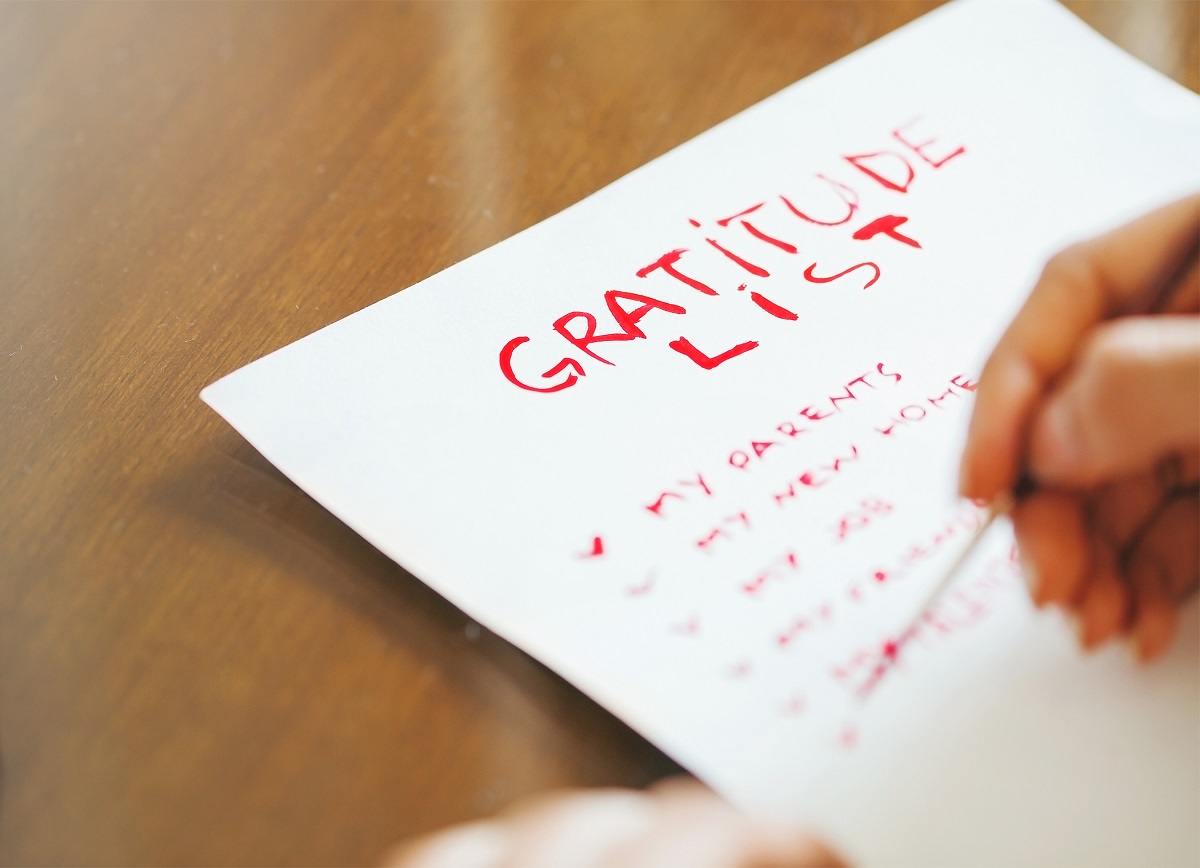
People sometimes struggle with gratitude exercises because they believe they need to produce important answers.
Family. Health. Opportunity. Home.
Those things may matter enormously, but mindfulness can also notice the very small pleasures that actually make up much of everyday experience.
The shower was hot.
The parking spot was close.
The strawberries were good.
The meeting ended early.
These things count.
Do not force a positive verdict
The exercise is not about declaring that today was wonderful.
Some days are not.
You might instead say:
Today was difficult, and these three moments were also part of it.
That is a more honest kind of awareness.
Challenge the one-word summary
Good day. Bad day. Productive day. Wasted day.
Real days are usually more complicated than the labels we place over them.
Remembering three actual moments restores some of that texture.
A frustrating day may have contained a good lunch, a funny conversation, and ten quiet minutes in the afternoon.
Recognizing those moments does not erase what went wrong.
It simply stops the worst moment from writing the entire story.
17. Use a 30-Second “You Are Here” Reset
There are moments when you suddenly realize you have disappeared into your own head.
You are replaying something from yesterday, imagining something next month, and barely noticing what is directly in front of you.
This final exercise is a quick way back.
Ask four simple questions
Stop and ask:
- Where am I?
- What am I doing?
- What am I feeling?
- What needs my attention next?
Answer plainly.
For example:
I am sitting at my desk.
I am supposed to be finishing this email.
I feel scattered and slightly irritated.
The next thing is to write the final paragraph.
That is enough.
Start with reality rather than the ideal version of the day
Within The Life Travel Map, “You Are Here” represents an honest starting point.
The same idea works well as a mindfulness habit.
Before trying to improve the moment, notice the moment you are actually having.
Not the morning you should have had.
Not the calm person you think you should be.
Not the version of today that existed before three unexpected things happened.
This moment.
Choose the next useful response
Once you know where you are mentally and physically, decide what deserves your attention.
That might mean continuing the task.
It might mean stepping outside for two minutes, calling someone, eating lunch, getting a glass of water, or acknowledging that you are more upset than you first realized.
Mindfulness brings you back into contact with reality before worry, distraction, or habit decides what happens next.
How to Turn These Mindfulness Exercises Into Happiness Habits
Reading 17 exercises can create a predictable self-improvement temptation.
You find several ideas useful and decide that from tomorrow morning you will practice twelve of them, stop checking your phone, meditate before sunrise, take mindful walks, eat every meal without distractions, journal before bed, and become an entirely different person by next Thursday.
Please don’t.
Mindfulness becomes useful when it fits into life, not when life has to be reorganized around mindfulness.
Choose one exercise first
Pick the exercise that fits something you already do.
If you drink coffee every morning, start with three mindful sips.
If you regularly walk from your car to work, use part of that walk.
If your phone is the main source of distraction, practice the five-second pause before unlocking it.
If evenings tend to blur together, use the three-moment review before bed.
One exercise practiced regularly is more useful than seventeen exercises admired briefly.
Attach it to a clear cue
Decide when the practice happens.
Not “I will be more mindful.”
Use something concrete:
- after I make my morning coffee;
- when I wash my hands after lunch;
- before I get out of the car at home;
- when I sit down for dinner;
- after I put my phone on charge at night.
A clear cue removes the need to remember mindfulness at random moments throughout a busy day.
Keep the minimum version very small
Your mindfulness practice should still be possible on a difficult day.
If the full version is a ten-minute walk, the minimum version could be one minute outside.
If the full version is eating a screen-free meal, the minimum could be the first three bites.
If the full version is an evening reflection, the minimum could be remembering one good moment.
Small practices survive real life better.
Do not measure success by whether your mind was quiet
A distracted mindfulness practice is still a mindfulness practice.
If you notice your mind wandered twenty times and return twenty times, you did not fail twenty times.
You practiced returning twenty times.
The goal is not to manufacture a perfectly calm mind.
The goal is to notice where your attention went and become a little more able to bring it back.
Let the habit earn its place
Try an exercise for several days and see what happens.
Does it create a useful pause?
Does it help you notice enjoyable moments?
Does it reduce automatic scrolling?
Does it make conversations feel more connected?
Does it simply annoy you?
If a practice feels artificial or unhelpful, choose another.
The point is not to become good at mindfulness exercises.
The point is to find a few forms of attention that make everyday life feel more fully lived.
Mindfulness Does Not Mean Being Happy All the Time
This distinction matters.
Mindfulness is sometimes presented as though sufficient attention will turn ordinary life into a permanent state of peace and gratitude.
That is not realistic.
Some present moments are difficult
The present moment can contain grief, uncertainty, pain, anger, exhaustion, loneliness, disappointment, or fear.
Paying attention does not make those experiences pleasant.
Sometimes mindfulness simply helps us recognize what is happening instead of adding another layer of resistance, judgment, or frantic distraction.
Happiness can coexist with difficulty
A hard week can contain a good conversation.
Grief can contain laughter.
Stress can coexist with affection.
An uncertain period of life can still contain excellent coffee, warm weather, music, friendship, humor, and moments of relief.
Mindfulness helps us notice the full range rather than allowing the loudest problem to become the only thing we see.
Attention makes ordinary happiness easier to register
Many of the experiences that contribute to everyday happiness are easy to miss precisely because they are small.
A comfortable chair.
A familiar voice.
Five quiet minutes.
A meal that tastes good.
Someone remembering something you told them.
A task finally finished.
A laugh you did not expect.
These moments do not announce themselves as significant.
They need attention.
A Simple Place to Begin Today
You do not need to practice all 17 exercises.
In fact, turning this article into a 17-part daily routine would rather defeat the purpose.
Pick the easiest useful exercise
Perhaps you take one intentional breath when you finish work.
Maybe you drink the first three sips of coffee without touching your phone.
Perhaps you listen properly when someone tells you about their day.
Maybe you notice one pleasant moment and stay with it for ten seconds before moving on.
Choose the exercise that asks for the least disruption and offers the most obvious benefit.
Try it for one week
Seven days is long enough to discover whether the practice feels natural.
If it helps, keep it.
If it does not, choose another.
No streak needs protecting. No score needs recording unless you genuinely enjoy doing that.
Remember what mindfulness is really doing
Mindfulness cannot guarantee happiness, and it does not make difficult circumstances disappear.
Sometimes the present moment is painful, frustrating, boring, uncertain, or simply ordinary.
But attention changes what becomes available to us.
Without attention, pleasant moments can happen almost unnoticed. Conversations become background noise. Food loses its taste while we scroll. Music plays without really being heard. A whole day can become summarized by its worst ten minutes.
Mindfulness gives ordinary life a little more room to register.
And sometimes happiness was not completely missing.
We were simply somewhere else when it arrived.