
Most attempts at change begin at the wrong size.
You decide you need to exercise, so the plan becomes five workouts a week. You want a tidier home, so Saturday is suddenly devoted to reorganizing half of it. You have not read much lately, so you buy three books and decide that 30 pages a night sounds reasonable.
For a few days, perhaps it is.
Then work runs late. You sleep badly. Someone needs something from you. The ambitious new habit meets an ordinary Tuesday and quietly disappears.
This is why I think small habits are often misunderstood. Starting tiny is not lowering your standards. It is separating the habit of beginning from the bigger result you eventually want.
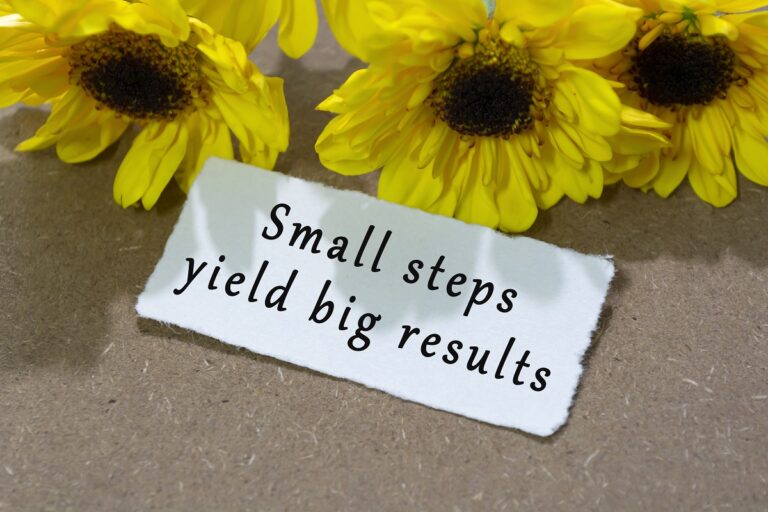
Make the action small enough to repeat first. Growth can come later.
Table of Contents
ToggleTiny Habits Work Because Starting Is Often the Hardest Part
A tiny habit is a deliberately small version of a useful behavior. It is designed to require little time, preparation, motivation, or emotional negotiation.
The action may look almost too small to matter.
That is partly the point.
A Tiny Habit Reduces the Cost of Beginning
Consider the difference between these two intentions:
“I will exercise for 45 minutes after work.”
and:
“After I change out of my work clothes, I will walk for five minutes.”
The first version asks for time, energy, clothes, perhaps equipment, and a reasonably cooperative mood.
The second mostly asks you to start.
Five minutes will not produce the same immediate fitness effect as 45 minutes. That is obvious. But if the 45-minute plan happens twice and the five-minute plan becomes part of 200 evenings, comparing the two only by the size of one session misses what matters.
Small Actions Leave Less Room for Negotiation
Large habits invite discussion.
Do I have enough time?
Should I start tomorrow instead?
Will twenty minutes even be worth it?
I am already tired. Maybe Monday would make more sense.
The smaller the starting action, the less material you give that internal committee to work with.
Reading one page does not require a motivational speech. Putting one item away barely qualifies as a project. Opening the document and writing one sentence makes it harder to claim that you cannot begin because there is no time.
This does not remove resistance completely. It lowers the entry price.
The Goal Is Repetition Before Expansion
This is the distinction that keeps tiny habits from becoming trivial habits.
You are not necessarily deciding that five minutes is all you will ever do.
You are deciding that five minutes is enough to preserve the behavior today.
Once the action fits reliably into real life, you can decide whether expanding it would be useful.
That order matters. Too many plans try to establish size, difficulty, and consistency all at once.
Do Not Confuse a Tiny Habit With a Tiny Goal
A small action can serve a large goal.
If you want to become stronger, five squats are not the final destination. If you want to write a book, one sentence is clearly not a chapter. If you want to improve your finances, checking one account balance does not create a complete financial plan.
The tiny action has a different job.
The Habit Builds Access to the Larger Behavior
Imagine you want to read regularly again.
The long-term goal might be to read several books a year. But perhaps reading has been absent from your evenings for months.
You could set the rule:
“Read for 30 minutes before bed.”
Or:
“After I put my phone on charge, I will read two pages.”
The two-page version creates a reliable doorway into reading.
Some nights you may read two pages.
Some nights you may read twenty.
Both count.
The Minimum and the Maximum Should Be Different
I find this one of the most useful ways to think about small habits.
Your habit can have a minimum without having a maximum.
Your minimum might be:
- walk for five minutes;
- read one page;
- write one sentence;
- put away five items;
- stretch for one minute;
- review tomorrow’s first appointment;
- save a small automatic amount each payday.
If you have the energy to continue, continue.
If you do not, the minimum still counts.
Do Not Punish Success by Raising the Minimum Too Quickly
This sounds strange, but it happens all the time.
You begin with a five-minute walk. Within a week, you are usually walking for 20 minutes. Soon you decide that 20 minutes is the “real” habit.
Then a crowded day arrives and you only have seven minutes.
Suddenly seven minutes feels like failure even though it was more than the original habit.
You have accidentally removed the flexibility that made the behavior sustainable.
Let your average performance grow while keeping the minimum small.
Choose a Tiny Habit That Actually Matters
Small does not mean random.
If you create fifteen miniature behaviors simply because they are easy, you can end up with a very efficient collection of things that make almost no difference.
The better question is: What small action would make an important part of my life easier to manage?
Start With Friction You Feel Regularly
Look for recurring annoyances rather than abstract self-improvement goals.
Maybe mornings feel rushed because you search for things before leaving.
A useful tiny habit could be:
After dinner, I will put tomorrow’s keys, bag, and anything I need by the door.
Maybe work begins badly because you open email before deciding what matters.
Try:
After opening my laptop, I will write down the first task I need to finish.
Maybe your home gets progressively messier during the week.
Try:
After I put my dinner plate away, I will reset one surface.
These habits are small, but they address something you repeatedly experience.
Choose the Behavior, Not the Outcome
“Feel less stressed” is not a habit.
“Become organized” is not a habit either.
Neither is “get healthy,” “save money,” or “be more productive.”
Those are outcomes or directions.
A habit needs to tell you what your body actually does.
Instead of “be healthier,” you might:
- fill a water bottle after breakfast;
- walk around the block after lunch;
- put fruit on the counter when unpacking groceries;
- go to bed ten minutes earlier after a particular evening cue.
The clearer the behavior, the easier it is to know whether it happened.
Pick One Before You Pick Five
Tiny habits are individually easy, which creates a new problem: enthusiasm makes it tempting to add too many.
One minute of stretching? Easy.
A glass of water? Easy.
One page of reading? Easy.
A gratitude sentence? Easy.
Five push-ups? Easy.
A quick expense check? Easy.
Individually, yes.
Together, they become another routine to remember and manage.
Start with one behavior. Give it somewhere to live. See what happens.
Attach the Habit to Something That Already Happens
A tiny action still fails if you continually forget to do it.
That is why a small habit needs a reliable cue.
Use an Existing Behavior as the Reminder
Look for events already built into your day:
- getting out of bed;
- turning on the kettle;
- making coffee;
- brushing your teeth;
- starting the car;
- opening your laptop;
- finishing lunch;
- clearing dinner plates;
- plugging in your phone at night.
Then connect the tiny action:
After I make coffee, I will drink a glass of water.
After I brush my teeth, I will floss one tooth to begin.
After I open my laptop, I will write today’s first priority.
After I finish lunch, I will walk for five minutes.
A reliable event takes over part of the remembering.
Choose an Anchor That Exists on Difficult Days
Do not attach your new habit to another unreliable habit.
“After my 6 a.m. workout, I will meditate” is a poor design if the workout itself keeps disappearing.
Your anchor should be boringly dependable.
Brushing your teeth may not sound inspirational, but inspiration is not the requirement.
Reliability is.
Keep the Cue Close to the Action
Physical distance adds friction surprisingly quickly.
If you plan to journal after coffee but the notebook is upstairs, you have turned a 30-second habit into a small expedition.
Leave the notebook where you make coffee.
Put the water bottle beside the kettle.
Leave walking shoes near the door.
Put the book on the bedside table rather than on a shelf in another room.
Make the next action available where the cue occurs.
Seven Tiny Habits That Can Have Effects Beyond Their Size
The best tiny habit depends on what your life needs. Still, a few types of small behavior are useful because they reduce friction in something that follows.
1. Write Down Tomorrow’s First Task
Before finishing work, write one clear instruction for tomorrow morning.
Not an entire to-do list.
Just the first useful task.
“Finish introduction to report” is better than “work on report.”
This tiny habit reduces the amount of deciding required when you begin again.
2. Reset One Surface After Dinner
Pick one visible surface such as the kitchen counter, dining table, or coffee table.
Clear it after dinner.
You may do more if you want, but one surface is enough.
The immediate reward is modest: tomorrow begins with one less mess waiting for you.
3. Walk for Five Minutes After Lunch
Five minutes is short enough to fit into many lunch breaks without turning the habit into a workout program.
It can also become the beginning of a longer walk when time allows.
Do not worry about whether five minutes is impressive.
Ask whether it is repeatable.
4. Read One Page Before Opening a Nighttime App
If you want to read more but automatically reach for your phone at night, change the order.
Read one page before opening the app.
You are not banning your phone. You are giving reading a chance to happen first.
Often the hardest part of reading is not continuing. It is opening the book.
5. Put One Thing Away When You Leave a Room
This will not clean a badly cluttered home.
It can, however, reduce the number of tiny objects that migrate to random places and stay there for three weeks.
Pick up one thing that belongs elsewhere when you leave the room.
Small maintenance habits help prevent every problem from becoming a weekend project.
6. Check One Financial Number on Payday
You do not need a full budgeting session every time money arrives.
A tiny financial check might simply be:
After I am paid, I will check my main account balance and upcoming major bills.
That keeps money visible without requiring a complete financial review each time.
If something needs attention, you can then decide what to do.
7. Put Your Phone Somewhere Deliberate Before Bed
One of the simplest digital habits is physical rather than technological.
Before getting into bed, put the phone in a chosen charging location rather than wherever your hand naturally drops it.
Even a few feet of distance changes what happens when you wake during the night or reach for stimulation automatically.
Small environmental changes often work because they alter the next decision.
Make the Habit Easier by Changing the Environment
If you keep forgetting or resisting a tiny habit, do not automatically make another promise to try harder.
Look around.
Your surroundings may be giving one behavior an unfair advantage.
Make the Useful Action Visible
A visible cue can do more than another notification.
Put fruit where you see it.
Leave the journal open.
Place your water bottle on the desk.
Keep your walking shoes ready.
Put the medication you need to remember in an appropriate, safe, visible location consistent with its instructions.
You want the desired action to appear at the moment you can perform it.
Reduce the Number of Steps Before Starting
Every extra step is small until you are tired.
Finding shoes.
Charging headphones.
Locating the notebook.
Remembering a password.
Deciding which workout to do.
A well-designed tiny habit removes as many of those decisions as practical.
If you plan to stretch for two minutes in the morning, decide the stretch beforehand. If you plan to write, leave the document open. If you want to save money automatically, schedule the transfer rather than manually reconsidering it every week.
Add Friction to the Competing Behavior
Sometimes making the new habit easier is only half the job.
If your phone is sitting beside you with every notification active, reading one page has to compete with a device built to attract attention.
Put it farther away.
Log out of an app you open automatically.
Remove the shortcut.
Keep distracting snacks somewhere less visible.
A tiny amount of friction can create the pause in which your intended behavior gets a chance.
Let the Habit Feel Successful Before You Make It Harder
People are often impatient with easy habits because easy does not feel productive enough.
But difficulty is not the same thing as progress.
Notice Completion
You do not need an elaborate reward.
Simply notice that the action happened.
Tick a box. Mark it on a calendar. Say “done.” Enjoy the clear counter. Notice that the shoes are already by the door for tomorrow.
Small habits benefit from immediate feedback because their larger payoff may be distant.
Use Enjoyment Where You Can
A habit does not earn extra points for being miserable.
If you are walking, choose a pleasant place when possible.
If you are cleaning for five minutes, put on music.
If you want to read regularly, choose a book you actually want to read rather than the one you think an impressive person ought to be reading.
Enjoyment reduces the amount of force required to return tomorrow.
Expand When the Current Version Feels Ordinary
A useful time to grow a habit is when the existing version no longer feels like much of an event.
You stop debating whether to do it.
You remember more easily.
The surrounding setup already works.
Then five minutes might become ten.
One page might become five.
One cleared surface might naturally lead to a five-minute evening reset.
Growth is easier when it is built onto something stable.
Know When Not to Grow the Habit at All
Not every tiny habit needs a development plan.
This is easy to forget in a culture that tends to treat improvement as permanent expansion.
Some Habits Are Better as Small Maintenance Actions
Writing tomorrow’s first task may only ever take 30 seconds.
Filling a water bottle does not need to evolve into a hydration ceremony.
Putting your keys in one place does not need levels, milestones, or a 12-week progression.
The habit already works.
Leave it alone.
Judge the Habit by What It Changes Around It
A two-minute action can be valuable because of what happens afterward.
Preparing clothes at night saves ten rushed minutes in the morning.
Writing down a task reduces the chance that you begin the workday in your inbox.
Clearing one counter makes breakfast easier.
Putting a book beside the bed makes reading more likely.
The habit’s value is not always contained within the minutes spent performing it.
Do Not Turn Simple Habits Into Another Self-Improvement Project
If your two-minute habit requires an app, a spreadsheet, a weekly performance chart, color coding, and an accountability group, something has gone wrong.
Tracking can help when it reveals a useful pattern.
But administration can also become more demanding than the behavior itself.
Use the lightest system that gives you the information you need.
Tiny Habits Need a Bad-Day Version Too
You might reasonably ask: if the habit is already tiny, how much smaller can it get?
Sometimes the answer is very small indeed.
The purpose is not to create an absurdly easy life. It is to keep a behavior recognizable when circumstances temporarily deteriorate.
Create a Floor Below Your Normal Minimum
Suppose your normal habit is a five-minute walk after lunch.
On an unusually difficult day, the emergency version might be walking outside, reaching the end of the street, and returning.
Your normal reading habit might be two pages.
The emergency version is one paragraph.
Your normal kitchen reset might take five minutes.
The emergency version is simply clearing the sink.
You would not use these versions forever. They are there to help the behavior survive periods when capacity is temporarily low.
Do Not Use a Missed Day as Evidence About Your Character
Sometimes the habit will not happen.
You may be sick, traveling, dealing with a deadline, caring for someone, or simply forget.
That does not require an investigation into your personality.
It requires a restart.
The most useful response is usually to perform the normal small version at the next appropriate cue.
Never Try to Pay Back Missed Habits
If you missed yesterday’s five-minute walk, today’s walk does not need to be ten minutes.
If you skipped two evenings of reading, you do not owe the book six pages.
Habit debt is imaginary.
Trying to compensate makes returning harder precisely when you need returning to be easy.
Measure Whether the Habit Is Producing a Useful Change
Consistency is valuable, but consistency by itself is not the ultimate goal.
You can consistently do things that make almost no difference.
Review the habit occasionally.
Ask Whether the Behavior Is Easier to Start
After a few weeks, are you spending less time negotiating with yourself?
Do you remember the action more naturally?
Does the cue reliably lead toward it?
If yes, that is meaningful progress even if the habit has not become completely automatic.
Look for Effects Outside the Habit
Has the five-minute evening reset made mornings calmer?
Has writing the first task helped you begin work faster?
Has your tiny walking habit started turning into longer walks without forcing them?
Does placing your phone outside reach at night mean you read more or sleep sooner?
These secondary effects often explain why a tiny action is worth keeping.
Change the Habit If Nothing Useful Is Happening
Do not protect a habit simply because you have maintained a streak.
If the action is easy but pointless, change it.
If the cue never works, move it.
If you constantly forget, improve visibility.
If you hate the behavior, ask whether another action could produce the same result.
A habit is a tool, not a loyalty test.
Use Tiny Habits to Improve One Part of Life at a Time
One reason small habits fit naturally within The Life Travel Map is that you rarely need to change every area of your life at once.
A small repeated behavior can support whichever area currently needs attention without turning improvement into a whole-life renovation project.
A Wellness Change Can Begin With Five Minutes
You might walk after lunch, fill a water bottle at breakfast, or begin dimming the lights slightly earlier at night.
None solves health on its own.
It creates one repeatable action you can build around.
A Productivity Change Can Begin With One Sentence
At the end of work, write:
“Tomorrow, begin with ______.”
That sentence may do more for tomorrow morning than another elaborate productivity system you abandon within a week.
A Money Habit Can Begin With One Automatic Decision
You might automatically transfer a small amount on payday, check one account before discretionary spending, or review one recurring charge each week.
Tiny financial habits are not a substitute for larger financial decisions when those are needed.
They make useful behaviors easier to repeat between those bigger decisions.
A Relationship Habit Can Take Less Than a Minute
A thoughtful message. Putting the phone down when someone begins talking. Asking one genuine follow-up question. Saying thank you for something specific rather than assuming appreciation is understood.
Small does not mean emotionally insignificant.
Build Your First Tiny Habit in Five Minutes
If you have been thinking about improving something for months, resist the urge to create a complete system today.
Create the smallest useful beginning.
Step 1: Name the Area That Is Creating Friction
Choose something concrete.
Mornings feel rushed.
You never exercise.
Your desk becomes chaotic.
You forget to read.
You lose track of small expenses.
The more specific the problem, the easier it is to find a useful behavior.
Step 2: Choose One Physical Action
Ask:
What is the smallest action that would move this in a better direction?
Perhaps:
- put keys beside the door;
- walk for five minutes;
- clear one section of the desk;
- read one page;
- check the account balance.
Step 3: Shrink It Again If You Are Already Bargaining
If you immediately start thinking about when you will find 20 minutes, the habit is probably not tiny yet.
Reduce it.
You can always do more later.
Step 4: Give It a Reliable Cue
Complete this sentence:
After I __________, I will __________.
For example:
After I pour my first coffee, I will fill my water bottle.
After I close my laptop, I will write tomorrow’s first task.
After I finish lunch, I will walk outside for five minutes.
Step 5: Prepare the Environment
Put whatever you need where the action will happen.
Do not expect tomorrow’s tired version of you to remember all the details that today’s planning version considers obvious.
Step 6: Decide What Counts
Write down the minimum.
If your rule is “walk,” you will keep renegotiating how much walking is enough.
If the rule is “walk for five minutes,” completion is clear.
Step 7: Test It for a Week
Do not ask whether you can maintain the habit forever.
Ask whether this version works in your actual week.
After seven days, review:
- Did I remember it?
- Was the cue reliable?
- Was the minimum genuinely easy?
- What got in the way?
- Did the action make anything better?
- Do I want to keep, change, or remove it?
Then make one adjustment.
Big Changes Often Begin Before They Look Impressive
A tiny habit does not promise dramatic results from microscopic effort.
That would be a much more exciting claim, but not a particularly useful one.
The real advantage is more practical.
Small Actions Give Consistency Somewhere to Begin
If an action requires very little time and effort, you can repeat it under a wider range of conditions.
Repetition gives you something stable enough to improve.
Without that stability, you keep rebuilding the beginning.
Consistency Creates Options
Once a five-minute walk is normal, you can make it longer.
Once one page is normal, reading more becomes easier.
Once a one-minute evening reset exists, you can decide whether five minutes would help.
You are no longer trying to build from zero.
The Smallest Habit Is Sometimes the One That Survives
The habit that changes your life is not necessarily the one that looks most ambitious on paper.
It may be the one that survives busy weeks, low-energy evenings, interruptions, travel, imperfect motivation, and the entirely ordinary fact that you sometimes do not feel like doing it.
Start small enough that beginning feels almost uneventful.
Give the habit a reliable cue. Make the environment helpful. Keep the minimum low even when you begin doing more.
Then let the change earn the right to grow.
Tomorrow, you do not need to improve your whole life. Pick one useful action and make it small enough to happen.