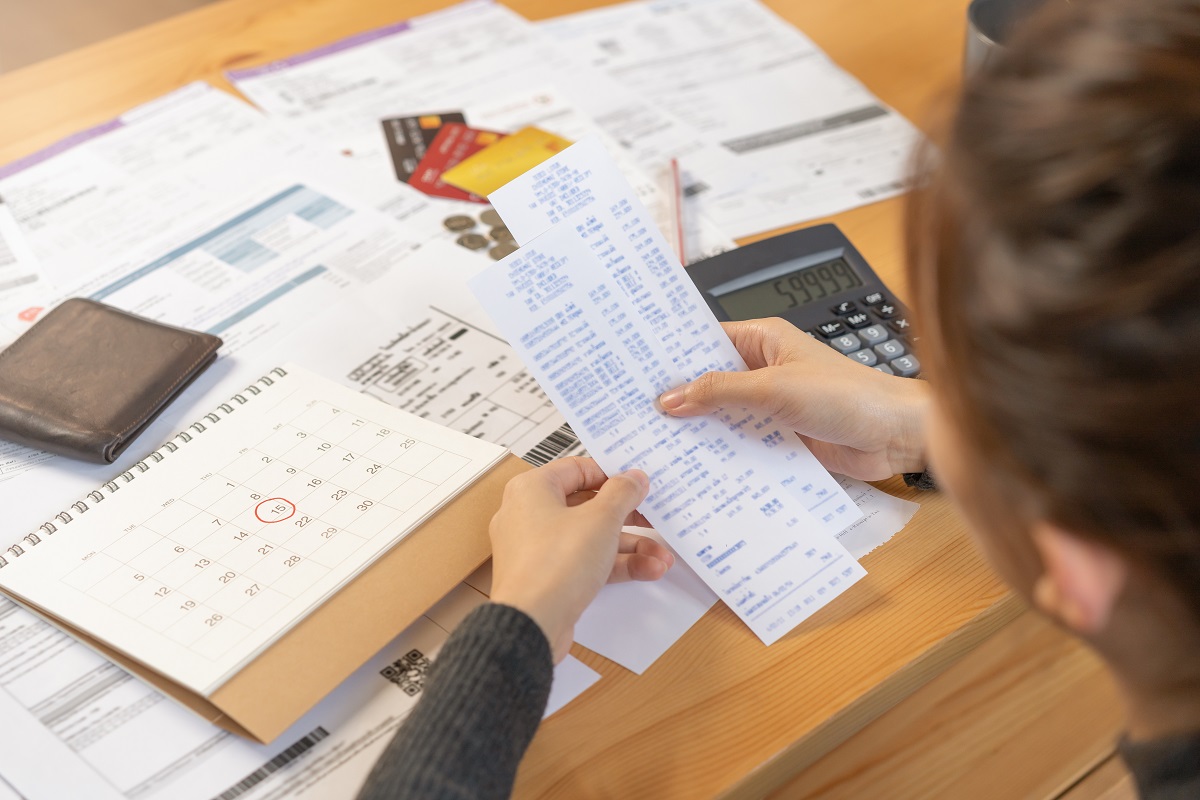

Missing a bill is sometimes less dramatic than people imagine.
There may be enough money in the bank. The bill itself is affordable. Nothing unusual happened.
You simply remembered it on Tuesday instead of Monday.
That is what makes missed due dates so frustrating. The problem is not always financial difficulty. Sometimes it is that several companies expect you to remember several dates, spread across several accounts, while work, family, appointments, school messages, and everything else are competing for the same attention.
Then the late fee arrives and turns a memory problem into a money problem.
A good bill-payment system removes as much remembering as possible. It puts every due date in one place, automates the payments that are safe to automate, keeps enough cash in the right account, and gives you one short weekly check for anything the system cannot handle by itself.
The goal is not to think about bills more often. It is to build a setup that lets you think about them less.
Table of Contents
ToggleStart By Listing Every Bill In One Place
Scattered bills create more work than necessary
Most people do not begin with one organized list of household bills.
The electricity bill arrives by email.
The mortgage comes from one account.
A credit card is paid through another app.
Insurance renews annually.
A subscription quietly charges the card.
A school or childcare payment arrives through a portal you only remember exists when it sends a notification.
Each bill may be perfectly manageable on its own.
The problem is that together they create a collection of separate reminders living in different places.
Your first step is simply gathering them.
Include monthly quarterly and annual obligations together
Write down anything that requires a recurring payment.
- rent or mortgage
- electricity
- gas
- water
- phone
- internet
- insurance
- loan payments
- credit card minimums
- childcare or school fees
- subscriptions
- memberships
- property related charges
Do not limit the list to monthly bills.
Annual and quarterly obligations matter too because they are often the ones easiest to forget.
Record the amount due date and payment method
For each bill, write down three basic pieces of information.
How much is normally due?
When is it due?
How is it currently paid?
You may also note whether the amount is fixed or variable.
A mortgage payment may be predictable.
An electricity bill may vary.
This distinction helps when deciding how much buffer the payment account needs later.
Use real account information rather than memory
Open the statements.
Check the apps.
Look at the most recent payment.
You may discover a bill renews on the 17th rather than the 20th, or that a subscription you thought was monthly now charges annually.
Small details matter when the purpose of the system is avoiding missed dates.
Create One Calendar For Every Due Date
A single calendar becomes your source of truth
Once the bills are listed, put every due date into one calendar.
This can be a digital calendar, budgeting app, spreadsheet calendar, paper planner, or another system you already use reliably.
What matters is having one place where you can look ahead and see what is coming.
If half the bills live in your email, three live in a banking app, and two are written on the refrigerator, you still have a remembering problem.
Add payment dates instead of only official due dates
A due date tells you the final day payment is expected.
Your system may work better with an earlier payment date.
If a credit card is due on the 20th, perhaps your calendar reminder is the 17th.
If an insurance bill requires a manual transfer, perhaps you schedule it several days early.
Building a little distance from the deadline reduces the chance that a technical issue or busy day turns into a missed payment.
Set reminders before manual bills become urgent
For bills that cannot or should not be automated, create at least one reminder before the payment date.
Maybe three days ahead.
Perhaps one week for a large annual bill.
The right amount of notice depends on whether money needs to be moved first.
A reminder that arrives ten minutes before the deadline is not much of a system.
Include annual renewals before the invoice appears
This is especially useful for insurance, registrations, memberships, and annual subscriptions.
Put the expected renewal month in the calendar now.
You may not know the final amount yet.
That is fine.
The reminder tells you to check the bill, confirm the amount, and make sure the money is ready.
Move Bills Toward Fewer Payment Dates
Too many dates create unnecessary mental switching
Imagine having bills due on the 2nd, 5th, 8th, 11th, 14th, 17th, 23rd, and 28th.
Technically manageable.
Also irritating.
You are always somewhere near another payment.
Some providers allow customers to change due dates or billing cycles.
If available and appropriate, consider grouping payments more closely around your pay cycle.
Match payment timing with when income arrives
Suppose you are paid on the 1st and 15th.
You might try to have one group of bills paid shortly after the first paycheck and another shortly after the second.
The goal is not creating perfect symmetry.
It is reducing the number of times each month you need to think about whether enough money is sitting in the correct place.
Do not move dates if the new timing creates pressure
A tidy calendar is not worth making cash flow worse.
If moving several bills causes too much money to leave in one week, keep them spread out.
Convenience should support affordability, not compete with it.
Test the new arrangement against your real income dates and household expenses before changing anything.
Use A Dedicated Account For Regular Bills
Separating bill money reduces accidental overspending
One account for bills can make the whole system much easier to understand.
Income arrives.
A planned amount moves into the bills account.
Regular obligations come from that account.
Everyday spending happens somewhere else.
Now money already promised to the mortgage, phone company, insurer, and lender is visually separated from money available for groceries or discretionary spending.
Calculate the average monthly bill amount first
Add the regular bills paid from the account.
If annual or quarterly bills will also be handled there, convert them to a monthly amount.
For example:
Regular monthly bills total $2,700.
Annual and quarterly bills average another $300 monthly.
The system therefore needs around $3,000 each month before adding any buffer.
This creates a clear funding target.
Transfer bill money as soon as income arrives
If possible, move the required amount shortly after payday.
This prevents bill money from spending several days pretending to be available household cash.
If paid twice monthly, perhaps half the amount moves after each paycheck.
If the bill schedule is uneven, you may transfer different amounts from different paychecks.
Use the pattern that matches your real cash flow.
Keep the bills account boring on purpose
Do not use the card attached to the bills account for restaurants, groceries, fuel, or impulse spending if you can avoid it.
The less activity there is, the easier it becomes to recognize whether enough money is available for upcoming obligations.
Boring accounts are underrated.
Build A Buffer Into The Bills Account
Exact funding leaves no room for ordinary variation
If your monthly bills normally total $3,000 and exactly $3,000 enters the account, the system looks efficient.
Then electricity is $74 higher than expected.
One payment processes a day earlier.
An insurance premium rises.
Now the entire account needs intervention.
A buffer is simply a small amount left above the expected total.
Choose a buffer that fits your cash flow
There is no universal number.
You might start with $200.
Perhaps $500.
A household with larger variable bills may want more.
The purpose is not creating another giant savings account.
It is absorbing small timing and amount differences without creating a failed payment.
Build the buffer gradually if money is tight
You do not need to fund it in one paycheck.
Add $25 or $50 each pay cycle.
Leave small bill-account surpluses in place rather than sweeping every remaining dollar elsewhere.
Eventually the account gains some breathing room.
Do not treat the buffer as extra spending money
If the account has a $400 buffer and shows $900 after bills, the first $400 is still doing a job.
It is protecting the account.
Otherwise the buffer disappears every time the balance looks unusually healthy and needs rebuilding again.
Automate Bills That Are Safe To Automate
Automation removes a task you already decided
Some payments do not need fresh judgment every month.
The mortgage.
Internet.
Insurance installments.
A fixed loan payment.
If the provider is trusted, the amount is expected, and enough money will reliably be available, automatic payment can remove one more opportunity to forget.
Prioritize payments with serious late consequences
Required debt payments are often especially important to protect.
An automated minimum payment can reduce the chance of accidentally missing a due date.
You can still make additional payments manually if that is part of your plan.
The automation protects the required minimum.
Use caution with highly variable withdrawals
Automatic payment can be less comfortable when the amount varies dramatically.
A utility bill that usually sits around $150 but occasionally reaches $500 deserves closer attention if cash flow is tight.
You may still automate it, but make sure your account buffer and alerts are strong enough to handle the variation.
Check the first few automatic payments closely
Do not assume a new direct debit works perfectly because you completed the setup.
Confirm the first payment.
Check the amount.
Make sure it came from the correct account.
After several successful cycles, it can move into the background.
Keep Some Bills Manual When Review Matters
Not every automatic payment deserves permanent trust
Automation is convenient partly because it makes payments easier to ignore.
That can be a disadvantage for services whose price changes regularly or that you may no longer want.
An annual membership.
A large insurance renewal.
A service contract.
You may prefer a manual approval step so the bill forces a review before money leaves.
Use manual payment for bills needing comparison
Insurance is a common example.
If the annual premium rises substantially, automatically renewing without checking alternatives may cost more than the convenience saves.
A calendar reminder several weeks before renewal gives you time to review the quote.
Keep the number of manual payments deliberately small
If every bill remains manual because you want maximum control, you have rebuilt the remembering problem.
Reserve manual handling for payments where reviewing the amount or service can genuinely change the decision.
Routine obligations can stay routine.
Set Alerts That Catch Problems Before Due Dates
Low balance alerts protect the payment account
Your bank may allow a notification when the account falls below a chosen amount.
This can be useful for a dedicated bills account.
If the normal buffer is $500, perhaps an alert at $600 or $700 tells you that upcoming payments deserve attention.
The warning arrives before the account reaches zero.
Use transaction alerts for larger automatic charges
A notification when a large transaction leaves the account gives you confirmation that the payment actually happened.
It also helps you notice an unexpectedly large bill quickly.
You do not need notifications for every $4 charge.
Choose thresholds that would cause you to take action.
Avoid creating so many alerts you ignore them
If your phone reports every card tap, balance change, transfer, login, and direct debit, the notifications become background noise.
Then the important one is easy to miss.
Use fewer alerts with clearer purposes.
Create A Weekly Ten Minute Bill Check
Automation still needs occasional human attention
A bill-payment system should reduce how often you think about bills.
It should not make you completely unaware of them.
Set aside ten minutes once a week.
Open the bill calendar.
Look at the next seven to fourteen days.
Check the bills account.
Confirm anything manual that needs paying.
That is enough for many weeks.
Look ahead instead of only checking what happened
The best question is not simply whether this week’s payments succeeded.
What is coming next?
A large insurance withdrawal?
A quarterly utility bill?
A loan payment?
A manual account that needs action?
A short look ahead gives you time to move money before it becomes urgent.
Confirm unusual or recently changed payments
If a provider recently changed its amount or payment method, give that bill extra attention.
The same applies after changing bank accounts, cards, or direct debit details.
Most payment systems become boring after they have worked for a while.
Changes are where mistakes are more likely.
Stop the review when nothing needs action
This is important.
You look at the calendar.
The account is funded.
Automatic payments are scheduled.
Nothing manual is due.
Done.
You do not need to turn a successful ten-minute check into an hour of unrelated financial administration.
Plan For Variable Bills Before They Spike
Use recent averages instead of one perfect month
Electricity may be $120 one month and $240 another.
Water may change.
Usage-based services move with household behavior.
Look at the previous year where possible and estimate a realistic average.
This gives your bills account a more reliable monthly funding target.
Save extra during cheaper months when possible
If winter electricity is usually higher, let some of the summer surplus remain in the bills account.
You are smoothing the cost across the year.
This is much easier than treating every high-use month as an unexpected blow to the budget.
Put known seasonal changes on the calendar
If a bill reliably rises during certain months, mark it.
A simple note saying “higher electricity likely this month” can be enough to prompt a quick balance check before the payment arrives.
Handle Annual Bills With Sinking Funds
Annual payment dates create a different cash problem
A $1,200 bill once a year is not really a $1,200 monthly problem.
It is closer to a $100 monthly planning problem.
Sinking funds turn annual obligations into smaller recurring amounts.
Divide the expected bill across remaining months
If insurance of roughly $1,200 is due in twelve months, set aside around $100 a month.
If it is due in four months and nothing has been saved, the amount becomes roughly $300 a month.
Your first year of planning may be uneven because you are catching up.
Move saved money into the payment account before due date
When the annual bill approaches, transfer the saved amount into your bills account several days ahead.
Now the payment calendar and sinking fund work together.
One system knows when the bill is coming.
The other makes sure the money is ready.
Restart the sinking fund after payment happens
Do not wait eleven months to remember next year’s bill.
Start the next cycle immediately.
Over time, annual obligations stop creating unusually expensive months because they are funded throughout the year.
Keep Credit Card Payments Especially Visible
Minimum payments should never depend on memory alone
If you use credit cards, protect at least the required payment.
Where appropriate, automate the minimum or another chosen amount from an account that is reliably funded.
Missing the payment because you forgot can create fees or other consequences depending on the account terms.
Statement balance and minimum payment are different things
A minimum payment generally keeps the account from being immediately overdue.
It does not necessarily prevent interest or reduce the balance quickly.
If your plan is to pay the statement balance or another larger amount, make that amount visible in the system.
Do not let the automated minimum quietly become the entire repayment strategy unless that is truly what your current circumstances require.
Check new card spending during the weekly review
If a card is being used regularly, glance at the current balance.
You are looking for whether the planned payment still fits and whether spending has increased more than expected.
This is not about judging every transaction.
It is about avoiding a statement amount that surprises you at the end of the month.
Give Shared Household Bills Clear Ownership
Someone should know who actually handles each bill
“We need to pay the gas bill” sounds shared.
It can also mean neither person knows whether the other has done it.
In households with shared finances, decide who is normally responsible for the manual parts.
One person might manage utilities.
Another handles insurance.
Automatic bills need less ownership, but somebody should still notice failures or changes.
Both adults should understand the core payment system
One person can do most of the administration.
That does not mean the other should have no idea which account pays the mortgage or where insurance information lives.
Both adults should understand the broad structure:
Where bill money sits.
Which payments are automatic.
Which bills remain manual.
Where the calendar is.
Where important documents are stored.
Make the system usable if the main organizer is unavailable
People get sick.
Travel.
Become overwhelmed.
Have unusually busy work periods.
A simple payment list makes it easier for someone else to take over temporarily without reconstructing the household finances from old emails.
Update Payment Details Immediately After Account Changes
A new card can quietly break several payments
Your debit or credit card expires.
The bank replaces it after suspected fraud.
You change financial institutions.
Suddenly several automatic payments still point to the old details.
This is one of the most preventable reasons for failed payments.
Keep a list of services linked to each card
If several recurring payments use one card, note them.
When the card changes, you now have a checklist.
Streaming services.
Phone.
Insurance.
Cloud storage.
Memberships.
Whatever applies.
Confirm updates before assuming they worked
After changing payment details, check the next billing cycle.
A confirmation email does not always mean the first payment processed correctly.
One minute of checking can prevent a much more annoying problem later.
Create A Backup Plan For Failed Payments
Automatic payment does not guarantee successful payment
A direct debit can fail because the balance is too low.
A card can expire.
A bank can block a transaction.
A provider can make an error.
Automation reduces risk.
It does not remove it.
Use failed payment alerts whenever providers offer them
Email and app notifications are useful here.
Do not leave failed-payment messages sitting unread for a week.
They are one of the few financial notifications that may deserve prompt attention.
Know which payment failures need immediate action
A failed music subscription and a failed mortgage payment are not equal problems.
Prioritize according to consequences.
Housing, required debt payments, insurance, essential utilities, and other high-priority obligations deserve faster attention than discretionary services.
Keep a small emergency method for genuine technical problems
If the usual payment account becomes temporarily inaccessible, know how you would pay an urgent bill another way.
This does not mean maintaining unnecessary credit or complicated backup accounts.
It simply means knowing the provider’s manual payment process before the deadline becomes urgent.
Review Subscriptions During Regular Bill Maintenance
Automatic payments make unwanted services easy to forget
A bill-payment system can become too good at paying things.
Three years later, you are still funding a service nobody uses.
Automation protects due dates.
It should not protect every recurring expense from scrutiny forever.
Review recurring services a few times yearly
You do not need to examine every subscription every month.
Quarterly or twice yearly may be enough.
Ask:
Do we still use it?
Has the price changed?
Is there a cheaper plan?
Would we sign up again today?
If not, cancel it.
Put major renewals in the calendar early
Annual subscriptions are especially easy to forget until the payment has already processed.
Add a reminder several weeks before renewal if the service is expensive enough to deserve review.
Use Review Without Making Bills Your Hobby
Review is the useful part of the system
Within The Life Travel Map, Money Habits uses Review as its gateway action.
A bill-payment system is a simple place to apply that principle.
Review what is due.
Review whether money is available.
Review anything that changed.
Then deal with the one thing that needs attention.
No larger metaphor is necessary.
Review should reduce future remembering
You notice an annual bill was not on the calendar.
Add it.
You realize one manual payment could safely be automated.
Automate it.
You discover the bills account buffer is too small.
Increase it gradually.
The point of reviewing is making next month easier than this one.
A successful review can end with nothing to do
The account is funded.
The automatic payments are correct.
No manual bills are due.
Nothing unusual happened.
Excellent.
Close the app.
A system that needs less intervention over time is working.
Build The Entire System In One Afternoon
First collect every recurring household bill
Use statements, email searches, banking transactions, and provider apps.
Write down the amount, due date, frequency, and current payment method.
Do not worry about optimizing anything yet.
Next create one calendar for due dates
Add every payment.
Create earlier reminders for manual bills.
Add annual renewals before the actual due date.
Now your future obligations are visible.
Then choose which bills should become automatic
Start with predictable recurring obligations where automation is appropriate and the payment account will reliably contain enough money.
Leave bills requiring active review manual.
Set up the dedicated bill account if useful
Calculate the monthly amount required.
Add a small buffer target.
Schedule transfers from income into the account.
Then move automatic payments to that account carefully and confirm the first cycle.
Add the weekly review to your calendar
Ten minutes.
Same day each week.
Look at upcoming payments, check the balance, handle manual bills, and stop.
Review the system after the first month
Did anything get missed?
Was the account underfunded?
Did a variable bill create trouble?
Were there too many manual payments?
Did the calendar give enough notice?
Make one or two adjustments and let the system run again.
A Good Bill System Should Feel Uneventful
Success is paying bills without repeated attention
There is nothing exciting about a mortgage payment leaving exactly when expected.
Or the insurance being funded before renewal.
Or the electricity bill clearing without anybody needing to move money at 10 p.m.
That is the point.
Your bill-payment system should make these events ordinary.
The best setup protects both money and attention
Missing a due date can cost money.
But the opposite problem matters too.
Thinking about every bill constantly costs attention.
The calendar holds the dates.
The automatic payments handle repetition.
The buffer handles small variation.
The weekly check catches exceptions.
Your brain does not need to do all four jobs.
Start with the bill you nearly forgot last time
You do not need to rebuild your entire financial system tonight.
Think about the last bill that was paid late, almost paid late, or remembered with an uncomfortable amount of last-minute panic.
Put it on one calendar.
Add an early reminder.
Decide whether it can safely be automated.
Make sure the payment account has enough margin.
Then do the same with the next recurring bill.
Eventually, the system begins carrying the dates for you.
And that is really the point of organizing bills in the first place.
Not becoming better at remembering them.
Needing to remember fewer of them at all.